On this page
- What makes a tool good for AI-generated code?
- How to choose
- The 2026 field, honestly
- Where each tool sits on the timeline
- Frequently asked questions
- What is the best tool to scan AI-generated code for vulnerabilities?
- What is the best AI code security tool in 2026?
- How is securing AI-generated code different from classic AppSec?
- Do I need to replace Snyk, Checkmarx or Aikido to secure AI code?
- Is there a European or sovereign AI code security tool?
- What should I evaluate in a proof of concept?
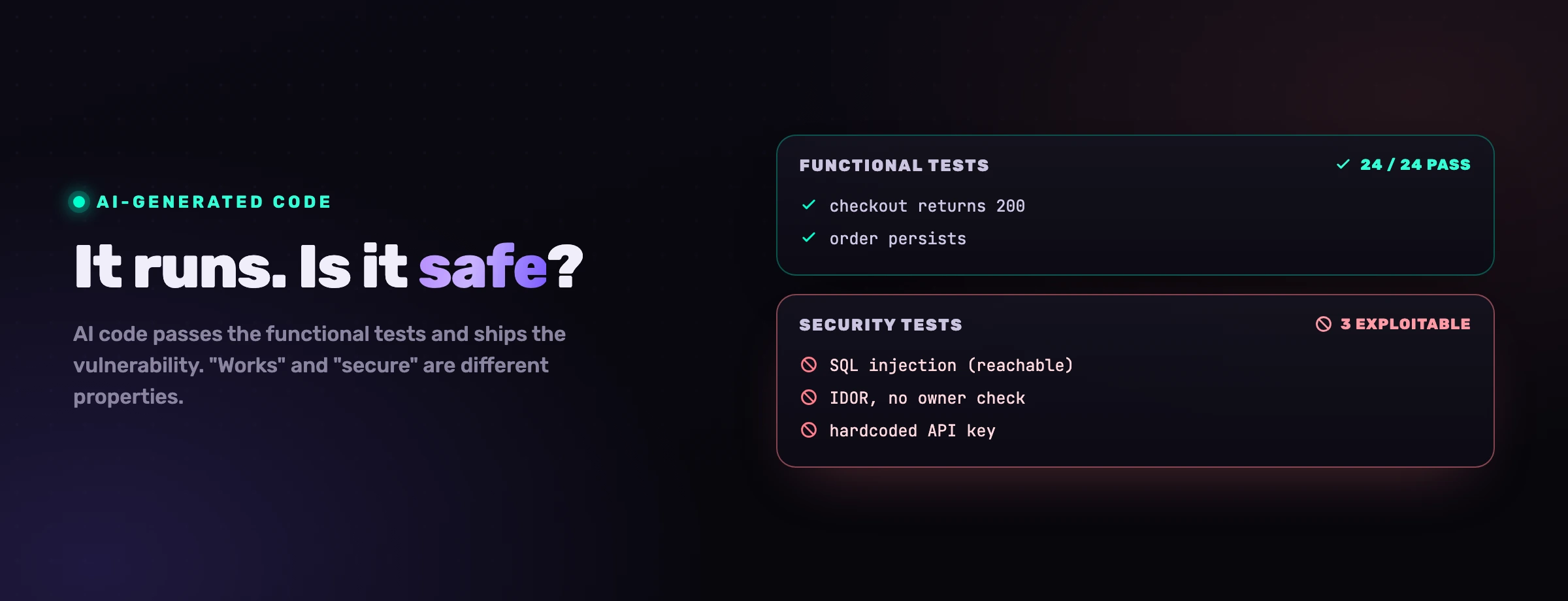
"Best AI code security tool" is the wrong question with the right instinct. There is no single best tool, but there is a real shift: when an AI agent writes most of the code, the job of a security tool changes. Volume explodes, so noise and reachability matter more. Vulnerabilities span SAST, dependencies, secrets and infrastructure in the same change, so point tools leave gaps. And the code is written inside an agent loop that moves faster than any pull request, so where the tool acts becomes the deciding criterion. This guide gives you the criteria that actually separate these tools for AI-generated code, a way to choose, and an honest read of the 2026 field.
What makes a tool good for AI-generated code?
The classic AppSec checklist (does it scan SAST, SCA, does it integrate with my CI) still applies, but it no longer separates the tools, because most of them check those boxes. What separates them for AI-generated code is a newer set of criteria, driven by how the code is now produced.
Read the right column as the tiebreakers. Two tools can both "do SAST and SCA" and be completely different products for an AI-first team, because one acts at the pull request and one acts inside the agent, one drowns you in 1,200 findings and one ranks the 12 that are reachable.
How to choose
Start from your bottleneck, not the feature list. Four honest questions resolve most decisions:
- Is your problem the volume of AI-generated findings, or the gaps between point tools? If volume, weight reachability and remediation. If gaps, weight unification.
- Do you want security to prevent or to detect? Detection lives at the PR and in CI and every serious tool does it. Prevention lives at generation time and far fewer tools reach it. If your developers ship faster than review, you need the prevention end.
- Who operates it, a central AppSec team or the developers themselves? Developer-first tools optimize for the IDE and PR; enterprise suites optimize for central policy and reporting.
- Do you have data-residency or sovereignty requirements? For EU and regulated teams this is a hard filter, and most of the field is US-hosted.
The 2026 field, honestly
A fair read of the main options. Every one of these is a capable tool; they are built for different bottlenecks.
| Tool | Strongest at | Where it acts | Best for |
|---|---|---|---|
| CybeDefend / VibeDefend | Agent-time enforcement + unified scanner platform + in-loop remediation | Generation time (in the agent) and CI | Teams securing AI coding agents, EU sovereignty |
| Snyk | Developer-first SCA, Snyk Code (SAST), container and IaC, autofix | IDE, PR and CI | Dev-first teams wanting broad coverage and ecosystem |
| Checkmarx | Enterprise AppSec suite, deep SAST, central policy | PR and CI | Large enterprises with a mature AppSec program |
| Aikido Security | Consolidating many scanners with low noise, transparent pricing | PR and CI | Startups and SMBs wanting one simple platform |
| Semgrep | Fast, customizable SAST and a strong rules engine | IDE, PR and CI | Teams that want custom rules and platform control |
| Endor Labs | Reachability-based SCA and dependency risk | PR and CI | Dependency-heavy teams prioritizing reachability |
| GitGuardian | Secrets detection and non-human identity | Commit, PR and CI | Teams whose first risk is secrets sprawl |
A few notes so the table is not read too flatly. Snyk and Aikido are both genuinely developer-friendly and a good default for teams that want coverage without a heavy rollout, Snyk with a larger ecosystem, Aikido with simpler consolidation. Checkmarx is the enterprise incumbent and shines where central governance and depth matter more than developer-loop speed. Semgrep is the tool to beat for custom rule authoring. Endor Labs made reachability its identity for dependencies. GitGuardian is the reference for secrets. None of these is wrong; they are answers to different bottlenecks.
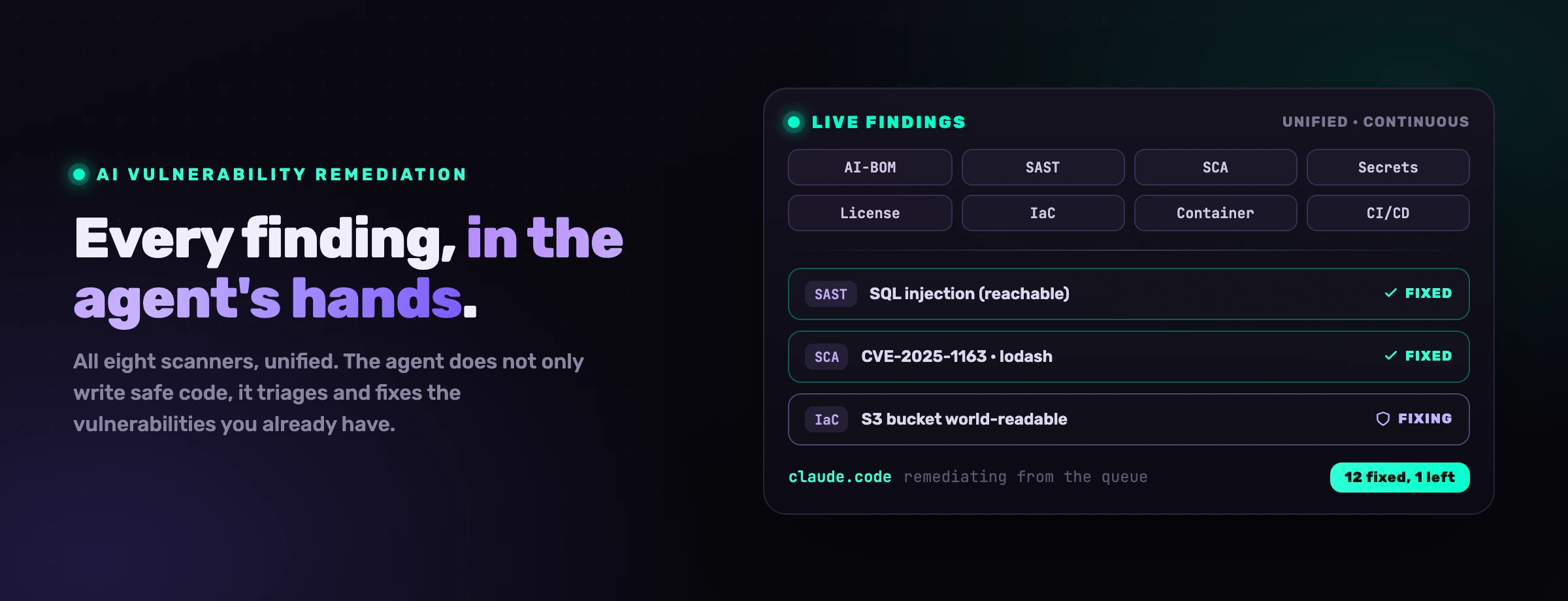
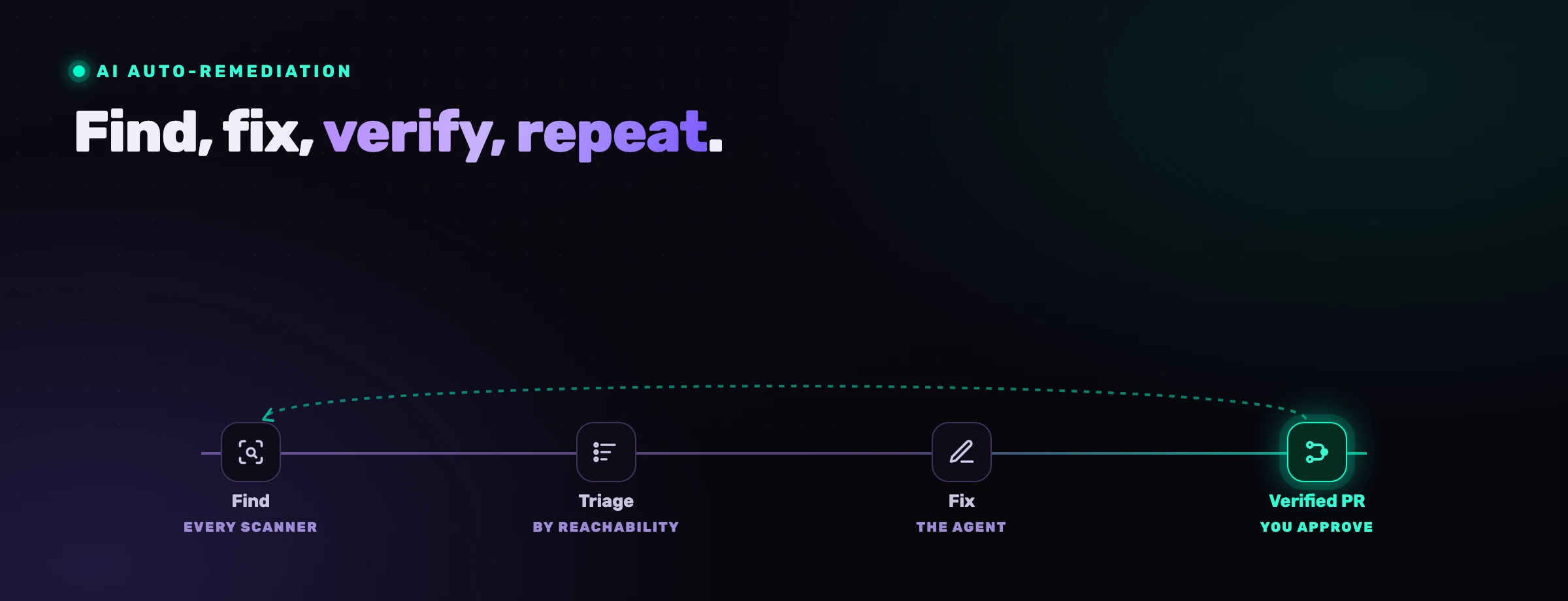
Where CybeDefend is different is the first row of the criteria table: it moves the control to generation time, inside the AI coding agent, and feeds a unified scanner platform (SAST with reachability, SCA, secrets, license, IaC, container, CI/CD, AI-BOM) into that loop so the agent writes safer code and fixes the existing findings in place. That is a deliberately different position from a PR-time or CI-time scanner, and it is the one built for a world where the agent, not the human, writes the line. The reasoning behind it is our pillar on AI coding agent security, and the remediation half is AI vulnerability remediation.
Where each tool sits on the timeline
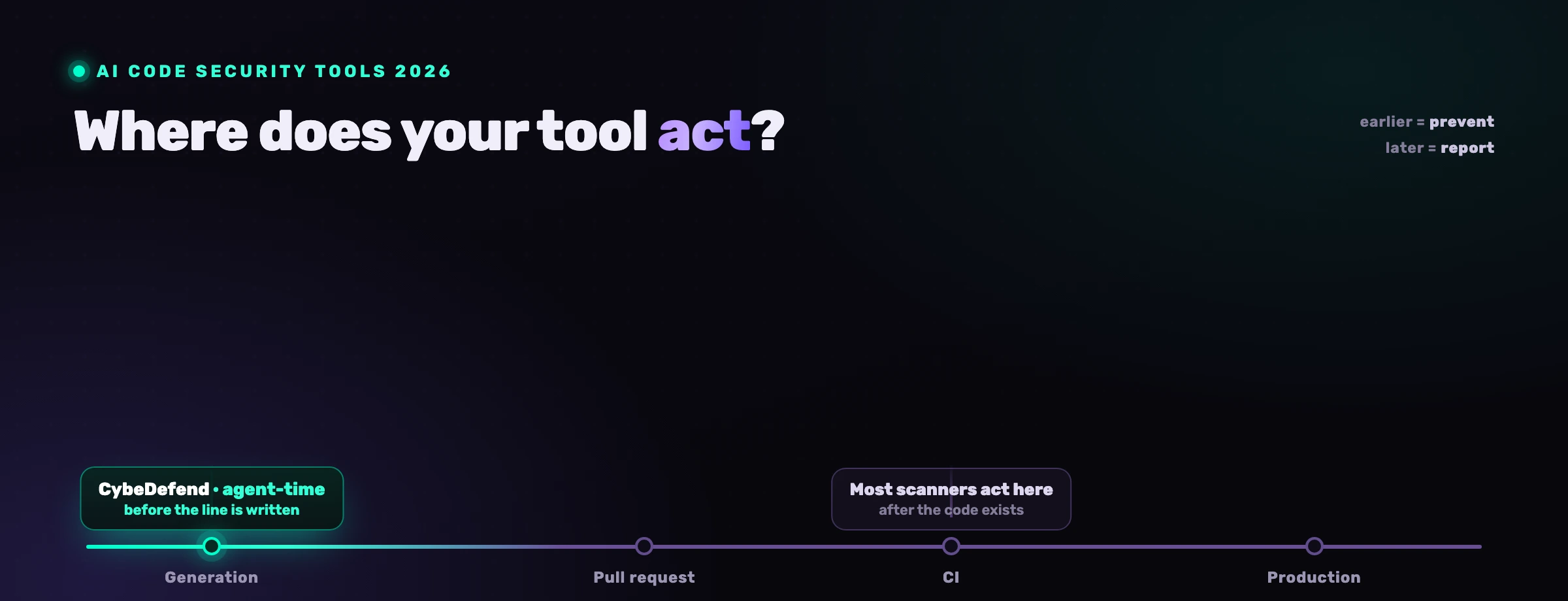
The single most useful way to compare them is when they act, because that determines what they can prevent versus only report. Most of the field acts at the pull request or in CI, after the code exists. Agent-time enforcement acts earlier, at the moment the code is written, which is the only point where a vulnerability can be stopped before it is created rather than found afterward. Neither replaces the other: you want generation-time prevention plus a CI gate as the backstop, the model we lay out in how to add security to your AI coding workflow.
VibeDefend is the agent-time piece, a free npm CLI that installs in seconds and wires Claude Code, Cursor, Windsurf, OpenAI Codex and VS Code Copilot into four governance layers in the agent loop.
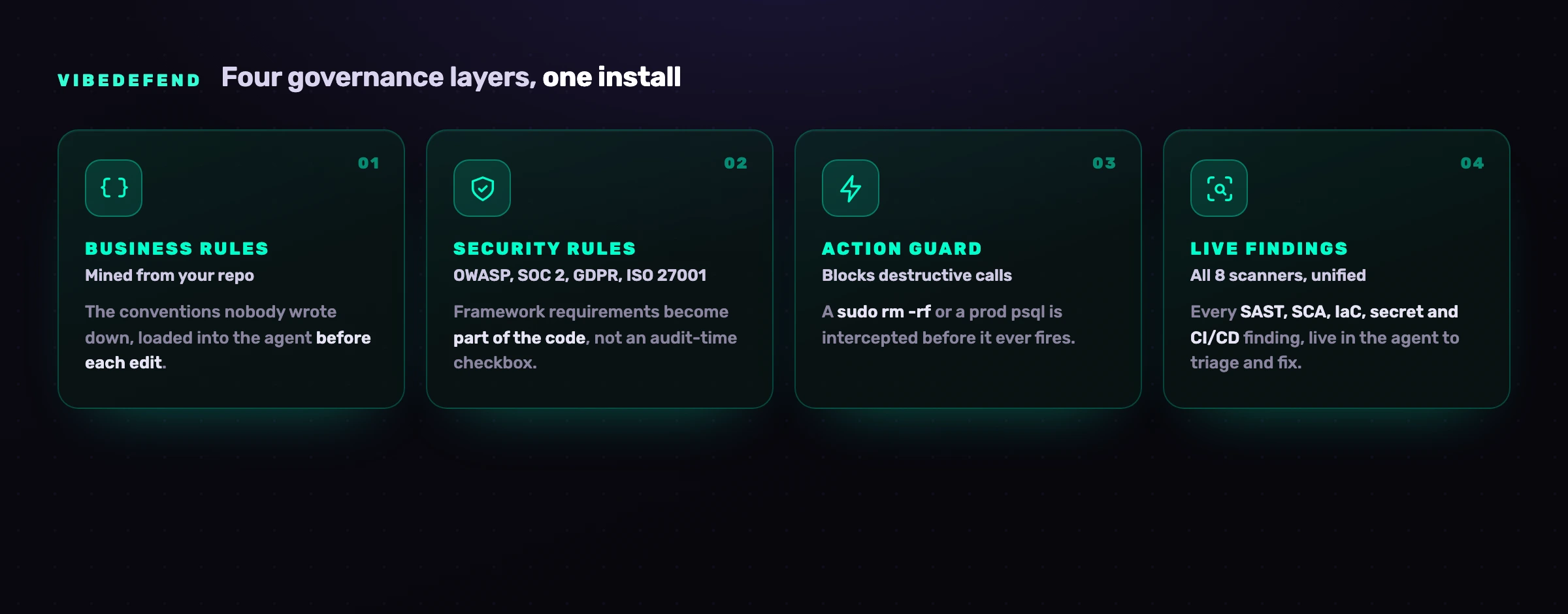
Business Rules and Security Rules govern what the agent writes, the Action Guard blocks destructive calls, and Live Findings wires the agent into the unified scanner platform so it fixes what you already have. Nothing about your code crosses the wire; only structured governance metadata does, on EU or US regions kept physically separate, which is the data-residency line most of the field cannot offer.
Frequently asked questions
What is the best tool to scan AI-generated code for vulnerabilities?
There is no single best tool; there is a best fit for your bottleneck. For AI-generated code the deciding criteria are where the tool acts (generation time vs the pull request), whether it ranks by reachability to survive the findings volume, whether it unifies SAST, SCA, secrets and IaC, and whether it remediates in the developer's loop. CybeDefend is built for the agent-time and unified-platform end; Snyk and Aikido are strong developer-first platforms; Checkmarx targets the enterprise; Semgrep owns custom rules; Endor Labs leads on reachability; GitGuardian on secrets.
What is the best AI code security tool in 2026?
The honest answer is "the one that solves your specific gap". If your problem is that AI agents ship insecure code faster than review, you want a tool that acts at generation time inside the agent, which is CybeDefend's position. If your problem is dependency risk, reachability-led SCA matters most. If it is secrets, a secrets leader. If it is enterprise governance, an enterprise suite. Match the tool to the bottleneck rather than to a generic "best" label.
How is securing AI-generated code different from classic AppSec?
The scanners are similar; what changed is volume, breadth and timing. AI generates findings at machine speed, so reachability ranking moves from nice-to-have to mandatory. Vulnerabilities span code, dependencies, secrets and infrastructure in the same change, so point tools leave gaps. And the code is written inside an agent loop faster than any pull request, so acting at generation time, not only at the PR, becomes the criterion that separates tools.
Do I need to replace Snyk, Checkmarx or Aikido to secure AI code?
Not necessarily. Many teams keep a CI scanner or SCA tool they already trust and add agent-time enforcement in front of it, so the safe code is written first and the CI gate becomes the backstop. The question is whether your current tool acts early enough for AI cadence; if it only acts at the PR, pairing it with a generation-time control closes the gap without ripping anything out.
Is there a European or sovereign AI code security tool?
Yes. Most of the established AppSec vendors are US-hosted, which is a hard filter for EU and regulated teams with data-residency requirements. CybeDefend is a French AppSec company with EU and US regions kept physically separate, chosen at install, and a privacy model where source code never crosses the wire, only structured governance metadata. For teams under DORA, NIS2 or GDPR-driven residency rules, that is a deciding criterion.
What should I evaluate in a proof of concept?
Run the candidates on your own repository and measure four things: how many of the findings are actually reachable and exploitable (signal vs noise), how much of the stack one tool covers without stitching others, whether it can fix as well as find, and where it acts in your workflow. For AI-first teams, add a fifth: does it work inside the AI coding agents your developers already use, because a tool they have to leave the agent to use is a tool they will skip.